
September 14, 2026
SEO Versus Paid Search: Which Drives Leads?
SEO versus paid search comes down to timing, cost, and lead quality. Learn how to choose the right mix to create a steadier customer pipeline over time.
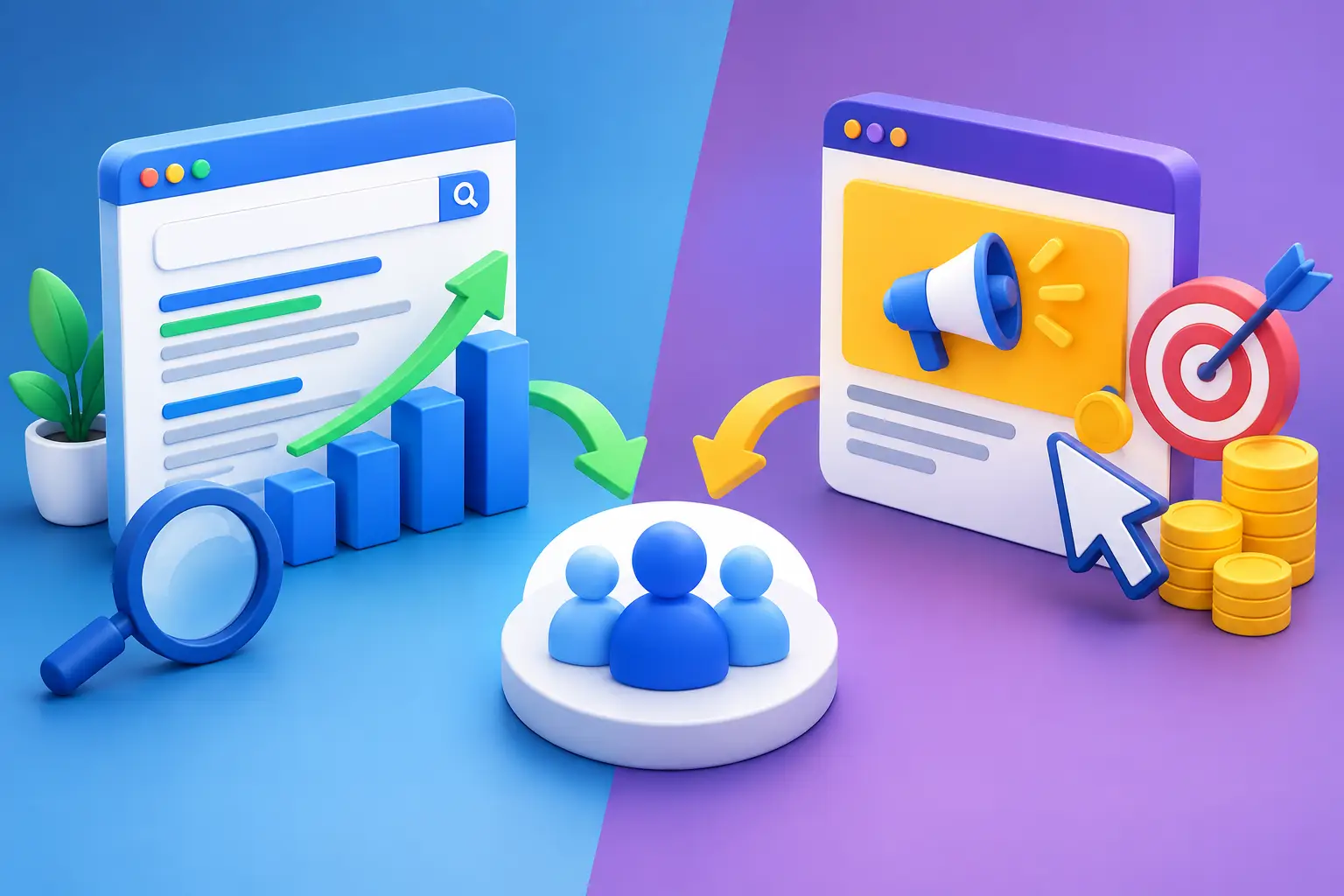
A homeowner in Destin searches “emergency AC repair” at 2:00 p.m. A dentist in Niceville wants to fill next week’s schedule. A contractor needs a more predictable pipeline before the busy season starts. For businesses in these situations, the SEO versus paid search question is not academic. It affects how quickly the phone rings, what each lead costs, and whether growth depends on constantly feeding an ad budget.
The wrong answer is rarely “SEO” or “paid search.” The real mistake is choosing a channel without matching it to your sales cycle, margin, market competition, website, and ability to track what happens after a click. We build marketing around customer acquisition, not channel loyalty. That means knowing what each channel can realistically do, where it falls short, and how the two can work together.
SEO Versus Paid Search: The Core Difference
Search engine optimization helps your business earn unpaid visibility in Google’s organic results. That can include your Google Business Profile, local map results, service pages, location pages, helpful content, technical website performance, and the signals that tell Google your business is credible and relevant.
Paid search, usually Google Ads, places your business in sponsored results when someone searches for terms you choose. You bid for visibility, write the ad, direct visitors to a landing page, and pay when a person clicks. You can launch a campaign quickly, control the geographic area you target, and adjust spend based on demand.
The simplest distinction is timing. Paid search can create demand capture now. SEO builds an asset that can generate qualified traffic over time. Neither traffic source is automatically profitable. If the ad points to a weak page or the organic listing attracts the wrong searcher, clicks will not turn into customers.
When Paid Search Is the Better First Move
Paid search is often the practical starting point when a business needs leads in the near term. A new home service company, a practice with open appointment capacity, or a business entering a competitive market may not have six to twelve months to wait for organic rankings to mature.
Google Ads is especially useful for high-intent searches. Someone looking for “water heater repair near me,” “same-day dentist,” or “commercial electrician” is usually closer to taking action than someone scrolling social media. The search itself tells you what problem they are trying to solve.
It also gives you faster feedback. You can see which services generate calls, which locations produce expensive leads, and which search terms bring in irrelevant clicks. With proper conversion tracking, you can connect ad spend to form submissions, phone calls, booked appointments, qualified opportunities, and eventually revenue.
That speed comes with a trade-off: traffic stops when spending stops. Competitive service categories can also become expensive. If your cost per click rises but your website converts only a small percentage of visitors, paid search can feel like a leak rather than a growth channel.
A campaign cannot compensate for a slow website, vague offer, unanswered calls, or a sales process that never follows up. The ad is only the front door. The page, tracking, response time, and close rate determine whether the investment produces profit.
Paid Search Works Best When You Have
Paid search tends to perform best when you have clear, valuable services; enough margin to acquire a customer; a focused service area; and someone ready to respond to leads. It is also a strong fit for seasonal offers, new locations, urgent services, and promotions with a defined capacity.
For example, a Panama City Beach vacation rental business may use paid search to capture booking demand for specific dates. A local roofer may increase budget after a storm, while tightly managing irrelevant searches. These are situations where waiting for organic visibility can mean missing revenue that is available right now.
Where SEO Earns Its Keep
SEO is less immediate, but it can reduce the business’s reliance on paid clicks over time. When a company consistently appears in local results and organic listings for the services people need, it creates a source of demand that does not require a payment for every visit.
For local businesses, the work often begins with the fundamentals: accurate business information, strong service pages, a technically sound website, useful location relevance, and a Google Business Profile that reflects the real business. Reviews matter because prospective customers use them to decide who feels credible, but they should be earned honestly through a consistent customer experience.
SEO also supports the research stage of the buying process. A business owner may not immediately search for “hire a marketing agency.” They may first search for “why are Google Ads leads expensive” or “how much does a new HVAC system cost.” Helpful pages can introduce your expertise before the buyer is ready to contact anyone.
The trade-off is that SEO is not a switch you flip. Rankings depend on competition, site quality, relevance, existing authority, and the search landscape in your market. A plumber in a small town may see movement sooner than a personal injury firm in a major metro area. No responsible marketer should promise a specific ranking on a specific date.
SEO Works Best When You Are Building for the Long Term
SEO is a strong investment for businesses with established services, repeatable customer demand, and a website worth sending visitors to. It is particularly valuable when the same core searches happen every month: dental services, home repairs, legal consultations, fitness memberships, real estate searches, and restaurant discovery.
It is also useful when paid search is becoming too dependent on rising auction costs. Organic visibility does not make ads unnecessary, but it can make your pipeline more resilient. If you rank well for valuable local terms and maintain paid coverage for your highest-priority searches, you are less exposed to any single channel.
The Cost Question Is More Than Cost Per Click
Business owners often compare SEO and paid search by asking which one costs less. That is understandable, but it is incomplete. The better question is which channel produces profitable customers at a sustainable acquisition cost.
Paid search has a visible media cost. You can usually see exactly how much was spent, how many clicks came in, and how many tracked leads resulted. That clarity is useful, provided your tracking is accurate. A form fill from a job seeker or a 10-second phone call is not the same as a qualified lead.
SEO requires investment in strategy, content, technical work, local optimization, and ongoing improvement. The costs may be less obvious because they are spread over time. But organic traffic is not free. It is earned through work that makes your site more useful, more discoverable, and more convincing than the alternatives.
Both channels should be measured past the lead stage. A dashboard should answer practical questions: Which campaign generated booked jobs? Which service page creates the best opportunities? What is the cost per qualified lead? What percentage of leads become customers? Without those answers, low-cost leads can hide poor-quality demand.
How to Choose the Right Mix
Start with the business problem, not the marketing label. If you need qualified inquiries this month, paid search deserves serious consideration. If you need to lower dependence on advertising and build durable visibility over the next year, SEO needs a place in the plan.
Many small and mid-sized businesses benefit from using both, but the budget split should not be automatic. A newer business may put more resources toward paid search while building foundational SEO. An established company with strong local visibility may use ads selectively for high-margin services, competitive terms, or seasonal demand.
Look at your website before scaling either channel. Service pages should make the offer clear, answer likely questions, show proof of credibility, and give visitors an easy next step. Landing pages for ads should match the search intent closely. If someone searched for drain cleaning, sending them to a general homepage creates friction and wastes paid traffic.
Then make tracking non-negotiable. Track calls, forms, booked appointments, and sales outcomes where possible. Use that information to remove poor search terms, improve ads, strengthen weak pages, and direct budget toward the services that create real pipeline. Marketing becomes easier to manage when decisions are based on outcomes instead of impressions.
A Better Way to Think About Search Marketing
SEO and paid search are not competing departments. They are two ways to show up when a potential customer raises their hand and asks Google for help. Paid search gives you control and speed. SEO compounds credibility and visibility. Your website and follow-up process convert that attention into revenue.
The strongest search strategy is usually the one that uses paid campaigns to capture immediate demand while steadily improving the organic foundation underneath them. Build the machine around qualified leads, booked work, and customer value - then let the channel mix follow the numbers.