
September 8, 2026
Google Ads Versus Local SEO: Which Wins?
Google Ads versus local SEO can both generate leads. Learn where each channel wins, what it costs, and how to choose the right mix for your business now.
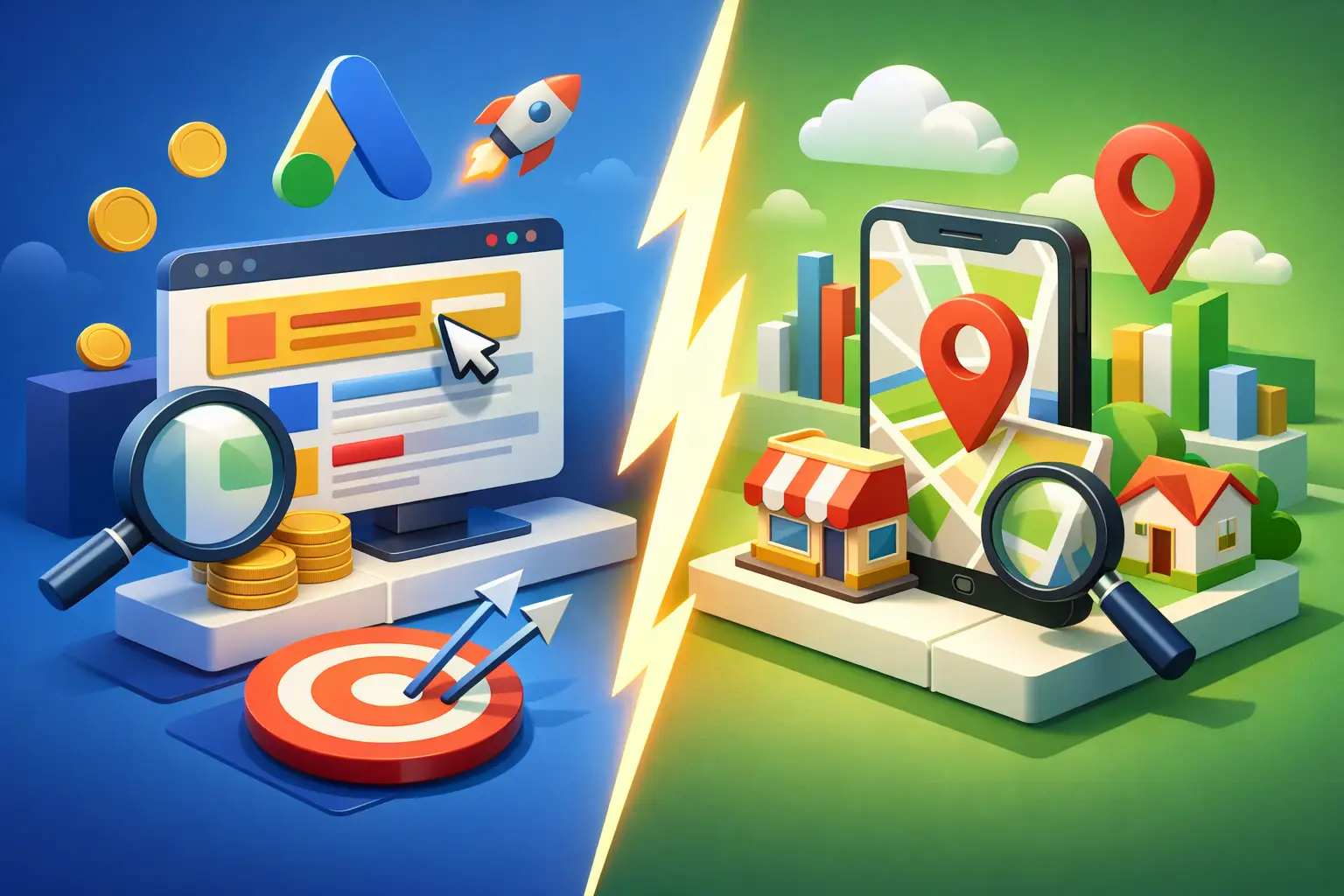
A homeowner in Destin searches “emergency AC repair” at 2 p.m. on a July afternoon. A Google Ad can put your company in front of that person immediately. A strong Google Business Profile and local organic presence can put you there too, often without paying for the click. That is the real question behind google ads versus local seo: not which channel is universally better, but which one can produce the right customer at the right time for your business.
For most local businesses, this should not be an either-or decision forever. Google Ads creates speed and control. Local SEO builds durable visibility and trust. The best choice depends on your lead needs, market competition, sales process, website conversion rate, and ability to track what happens after someone contacts you.
Google Ads Versus Local SEO: The Core Difference
Google Ads is paid placement. You bid to appear when people search for terms related to your services, location, and buying intent. If the campaign is set up well, you can begin generating qualified traffic as soon as the ads are approved. You pay when someone clicks, whether or not that click becomes a lead.
Local SEO is the work of improving how your business appears in local search results, especially the map pack and localized organic listings. It involves your Google Business Profile, service and location information, reviews, website content, local relevance, and technical website health. You do not pay Google per organic click, but earning and maintaining visibility requires consistent work.
The practical difference is simple: Google Ads rents attention. Local SEO earns an asset.
That does not make local SEO “free,” and it does not make Google Ads wasteful. A well-run ad account can be one of the fastest ways to fill a schedule, launch a new location, test a service, or stabilize lead volume during a slow period. Local SEO can lower your dependence on paid media over time and capture customers who prefer established local businesses.
When Google Ads Is the Better First Move
Google Ads usually makes sense when you need demand now and there is clear search intent for what you sell. A plumber, dentist, roofing company, personal trainer, or restaurant with private event bookings can reach people actively looking for help instead of waiting months for rankings to improve.
It is especially useful in these situations:
- You have a new business, new service, or new service area with little organic visibility.
- Your business has high-value jobs or appointments that can support paid acquisition costs.
- You need to control lead volume around staffing, seasonality, or available appointment slots.
- You want to test which services, offers, locations, or messages create real demand before investing heavily in content.
For example, a contractor on the Emerald Coast may want more kitchen remodel inquiries, not just general website traffic. Search campaigns can target high-intent terms around kitchen remodeling, cabinet installation, and renovation estimates in specific service areas. The campaign can send clicks to a page built around that service, with a clear form and call option, rather than dropping visitors onto a generic homepage.
The catch is that ads magnify whatever is already broken. If your landing page is confusing, your calls go unanswered, or your form leads sit untouched for two days, buying more clicks will not fix the problem. It will just make the problem more expensive.
What makes Google Ads profitable
The ad itself is only part of the machine. Profitable campaigns require accurate conversion tracking, useful search term data, negative keywords, location controls, strong landing pages, and a process for following up quickly.
Business owners often focus on cost per click. Cost per qualified lead, booked appointment, closed customer, and revenue generated are better measures. A $20 click that produces a $5,000 project may be a bargain. A $3 click that produces tire-kickers is not.
When Local SEO Is the Better Investment
Local SEO is often the stronger first investment when your business relies on geographic trust and receives recurring local search demand. Think dentists, med spas, home service businesses, local restaurants, fitness studios, and professional service firms.
Someone searching “dentist near me” or “best breakfast in 30A” is not only looking for a category. They are comparing nearby options. Your map visibility, review profile, photos, hours, service details, and website all influence whether they call, request directions, or choose someone else.
Local SEO is particularly valuable when customers search repeatedly for your category throughout the year. Unlike a paid campaign that stops appearing when budget pauses, a well-established local presence can continue generating calls, website visits, and direction requests. It can also support branded searches created by referrals, social media, signage, and offline advertising.
Still, SEO has a slower feedback loop. In a competitive market, meaningful gains can take months. Results also depend on factors beyond your website, including competitors’ review strength, proximity to the searcher, category relevance, and the history and completeness of your Google Business Profile.
What local SEO actually requires
Local SEO is not publishing a few city-name pages and hoping for the best. It starts with getting the fundamentals right: accurate business information, properly selected categories, service descriptions, review generation processes that follow platform rules, and a website that clearly explains what you do and where you work.
Then comes relevance. If you want to rank for a profitable service, your site needs a useful, focused page that answers the questions a prospective customer has before contacting you. It should explain the service, establish why your business is a fit, show the next step, and work well on a phone.
The goal is not traffic for its own sake. The goal is more calls, forms, booked consultations, reservations, and customers from the searches that matter.
The Cost Comparison Most Businesses Miss
Google Ads has a visible cost: ad spend plus the work needed to manage campaigns and improve conversion rates. Local SEO has a less visible cost: strategy, content, technical improvements, profile management, reputation processes, and time.
The mistake is treating either channel as a line-item expense without considering customer value. A dental practice may be able to pay more to acquire a new patient than a one-time, low-margin service business. A roofing contractor may accept a higher lead cost if one closed project creates substantial revenue. A restaurant may prioritize map visibility and directions because the decision happens quickly and the customer value is lower per visit but repeatable.
Your economics should set the budget. Start with average customer value, gross margin, close rate, and how many leads your team can realistically handle. Then calculate an acceptable cost to acquire a customer. Without that number, it is hard to judge whether ads or SEO are working.
The Strongest Strategy Is Often Both, in the Right Order
A business with no reliable lead flow may start with Google Ads because it needs immediate data and opportunities. At the same time, it should build the local SEO foundation that reduces reliance on paid clicks later.
Ads can reveal which search terms convert, which neighborhoods produce better jobs, and which services generate the most profitable leads. That intelligence can shape SEO pages, Google Business Profile updates, and broader growth decisions. Local SEO then captures more of the demand that ads helped identify.
For an established business with strong map rankings but inconsistent leads during certain months, ads can fill gaps without replacing what already works. For a newer business with a limited budget, focusing first on a credible website, conversion tracking, and local search fundamentals may be smarter than spreading money too thin across every channel.
This is why channel decisions should be tied to a measurement plan. Track calls, forms, booked appointments, qualified leads, closed revenue, and pipeline value where possible. Impressions and clicks can help diagnose performance, but they are not the finish line. We are accountable to pipeline and revenue, not impressions.
Before You Choose, Fix the Conversion Path
There is little value in winning the click if the visitor cannot quickly understand your offer or take action. Whether traffic comes from a paid ad or a map listing, the destination needs to do its job.
Check the basics. Does the page match what the person searched for? Is the phone number easy to tap? Is the form short enough to complete? Does the page answer common concerns about service area, timing, price expectations, or next steps? Are calls and forms tracked so you know which channel created them?
A better website and cleaner tracking frequently improve both Google Ads and local SEO at the same time. That is where a customer acquisition system beats isolated marketing tactics.
If you need leads quickly, use Google Ads with disciplined tracking and a page built to convert. If you want to build a lasting local presence, invest in local SEO before competitors make the gap harder to close. The useful next step is not picking a side. It is identifying where your next qualified customer is already searching, then building the clearest path from that search to a real conversation.