
September 22, 2026
Web Designers Who Build Websites That Get Leads
Web designers should do more than make a business look polished. Learn what to look for in a site that earns calls, forms, bookings, and real revenue.
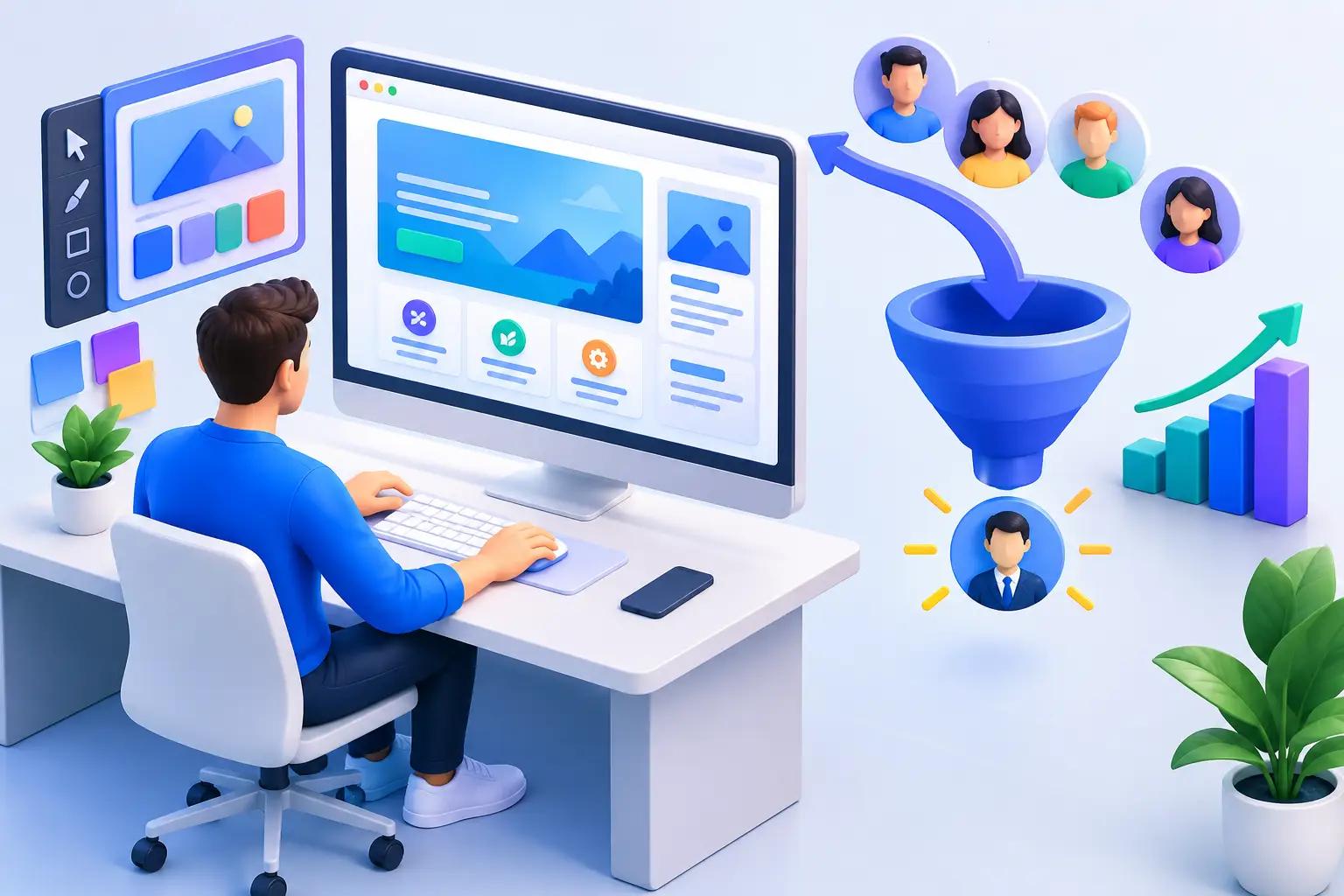
A homeowner whose AC quits in July is not looking for an impressive animation. They want to know whether you serve their area, whether someone can come out soon, and how to call you. That is the gap between a website that looks good and one that produces business. The best web designers understand that a site is part of the sales process, not a digital brochure.
For a local service business, dental office, restaurant, hotel, or professional firm, the website often has to do several jobs at once. It needs to establish trust, explain the offer, answer obvious questions, work properly on a phone, and give a visitor a clear next step. If it cannot do those things, more traffic from Google Ads, Meta Ads, SEO, or referrals will not fix the problem.
What Web Designers Should Actually Be Designing For
A business website should be designed around customer action. That might mean a phone call, appointment request, estimate form, booking, direction request, or purchase. The right action depends on the business model, but it should never be vague.
A contractor may need a visitor to request an estimate. A Destin vacation rental operator may need them to check availability. A dental practice may need online booking or a call from a new patient. These are different paths, and the page layout, messaging, proof, and calls to action should reflect that.
Design matters because it shapes how easy a site is to use and how credible a business appears. But visual style is only one piece of the job. A beautiful website with a hidden phone number, slow mobile experience, confusing navigation, or generic copy can quietly cost a business leads every day.
The practical question is not, “Do we like this design?” It is, “Can the right visitor understand what we do and take the next step without effort?”
Start With the Customer's Decision, Not the Homepage Mockup
Before choosing colors, fonts, or page sections, a good web project starts with the customer acquisition process. Where are visitors coming from? What problem are they trying to solve? What objections might stop them from contacting the business? What information do they need before they feel comfortable acting?
For example, a person clicking a Google Ad for emergency plumbing has a different mindset than someone reading an article about replacing an aging water heater. The emergency visitor needs speed, service area confirmation, and a prominent call button. The research-stage visitor may need pricing context, service details, reviews, financing information, and a way to schedule an estimate.
Both visitors could land on the same general service page, but treating them identically leaves opportunities on the table. This is why landing pages often outperform sending paid traffic to a general homepage. A focused page matches the search, addresses the decision, and removes distractions.
Clear Offers Beat Clever Headlines
Small and mid-sized businesses often use homepage language that sounds polished but says very little. “Quality service you can trust” may be true, but it does not tell a visitor what the company does, where it works, or why they should call now.
A clearer approach names the service, the customer, and the location or service area when relevant. A roofing company serving the Emerald Coast, for instance, should not make visitors hunt for whether it handles roof repairs, replacements, storm damage, or the communities it serves.
That does not mean every headline needs to be long. It means the message needs to earn clarity before it tries to be clever. People skim. If the offer is unclear in the first few seconds, many will leave and compare another option.
Trust Needs to Appear Before the Form
A contact form is a request for commitment. Visitors are more likely to submit it when the page has already answered basic trust questions. Who is this business? Is it legitimate? Do they handle my need? Can I expect a response? What happens after I reach out?
Useful proof can include customer reviews, project photos, credentials that are relevant to the service, recognizable service areas, clear process explanations, and specific descriptions of the work. The details matter. A page with real information generally builds more confidence than one filled with broad claims.
For hospitality businesses, trust may come from current room photos, clear amenities, policies, and location context. For professional services, it may come from explaining the process and setting expectations for an initial consultation. The right proof changes by industry, but the principle stays the same: reduce uncertainty before asking for the lead.
Mobile Is the Main Experience for Many Buyers
A website can look excellent on a desktop monitor and still fail where it matters. For many local businesses, the majority of prospective customers arrive on a phone. They may be sitting in a car, standing in a store, comparing options between meetings, or searching from a hotel room.
Mobile design is not simply shrinking a desktop page. Phone users need tap-friendly buttons, readable text, short forms, fast page loads, and important details near the top of the page. A phone number should be easy to tap. A booking button should not disappear under a menu. A visitor should not need to scroll through large image blocks before learning what the business offers.
Speed is part of conversion, too. Heavy video files, oversized images, and unnecessary scripts can slow a page down enough to lose impatient visitors. There is a trade-off here: high-quality visual assets can support credibility, especially in real estate, hospitality, and home services. They just need to be properly sized and used with purpose.
Web Design and Traffic Strategy Need to Work Together
A website should not be planned in isolation from marketing. If a business is investing in Google Ads, the site needs pages that closely match high-intent searches. If it is running Meta Ads, the landing page may need more education and proof because the visitor was not actively searching. If local SEO is a priority, service pages need useful, original information that helps both searchers and search engines understand the business.
This is where many businesses lose visibility into what is working. Ads generate clicks. The site gets forms and calls. But nobody can reliably connect the lead back to its source, campaign, or service. Decisions then get made based on impressions and traffic instead of actual customer acquisition.
A conversion-focused website should support measurement from the beginning. At a minimum, businesses should be able to see form submissions, calls from the website, booking actions, and meaningful page engagement. For businesses with longer sales cycles, the stronger setup also connects qualified leads and closed customers back to the original marketing source.
That changes the conversation. Instead of asking whether a website “feels better,” an owner can ask which pages produce qualified inquiries, which campaigns create booked jobs, and where visitors drop off.
Questions to Ask Web Designers Before You Hire
The right partner should be comfortable discussing business outcomes, not just visual preferences. Ask how they determine the primary conversion goal for each page. Ask whether they build distinct landing pages for paid campaigns. Ask how they approach mobile usability and site speed. Ask what will be tracked after launch and who owns the accounts, website access, and data.
It is also worth asking how content gets developed. Design cannot compensate for weak messaging. If a provider expects you to supply every word, every photo, and every page decision without a clear process, the project can stall or end up sounding like every competitor in town.
Finally, ask what happens after the site launches. A website is not permanently finished because customer behavior, ad campaigns, service offerings, and seasonal priorities change. A Panama City Beach tourism business may need different landing page emphasis before peak travel periods than it does during the slower months. A home service company may want to feature different services as weather and demand shift.
A Website Should Pull Its Weight
The best websites do not need to be flashy. They need to make it easy for the right customer to choose the business. That takes clear messaging, focused page paths, credible proof, strong mobile execution, and tracking that shows whether leads turn into real opportunities.
At Spry Growth, we look at web design as part of the full acquisition system: traffic, landing pages, calls, forms, follow-up, and revenue. A site should not just represent the business well. It should give the business a clearer, more measurable path to its next customer.