
September 26, 2026
Landing Pages Versus Homepages: Which Converts?
Landing pages versus homepages serve different jobs. Learn where each fits, what converts better, and how to route paid traffic for more leads reliably.
A homeowner clicks your Google Ad for emergency AC repair at 8:30 p.m. They need a technician, a fast answer, and a phone number. If they land on a general website homepage with a navigation menu, company history, five services, and a blog link, you have made their next step harder. That is the practical difference between landing pages versus homepages: both matter, but they are built to do different jobs.
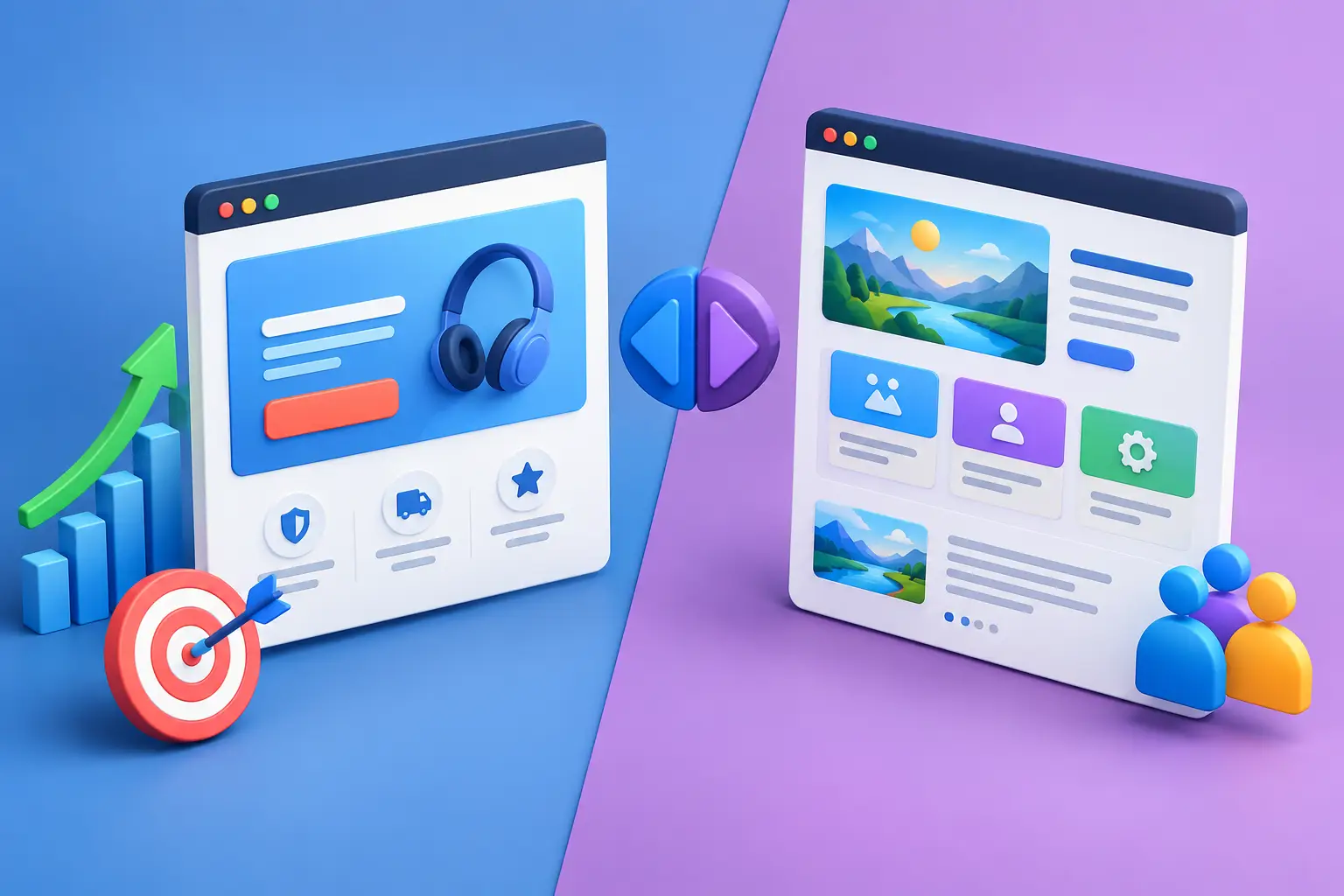
A homepage helps people understand your business. A landing page helps a specific visitor take one specific action. Confusing the two is one of the most common reasons paid traffic produces website visits without enough calls, form submissions, bookings, or revenue.
Landing Pages Versus Homepages: The Core Difference
Your homepage is the front door to the business. It has to serve several audiences at once: a referral checking your credibility, a local customer searching your services, a potential employee, a returning client, or someone who wants your address and hours. It should quickly explain what you do, who you help, where you operate, and why someone should choose you.
A landing page has a narrower assignment. It is usually built around one traffic source, one offer, one audience, and one conversion goal. That goal might be calling for a same-day appointment, requesting an estimate, booking a consultation, or claiming a seasonal package.
Think of a Destin-area dental practice running ads for dental implants. The homepage should introduce the practice and its full range of care. But an ad for implant consultations should send people to a page focused on implants: candidacy, the process, financing options if applicable, patient concerns, the consultation form, and a clear phone number. The visitor should not have to hunt for the reason they clicked.
This is not an argument that every business needs to abandon its homepage. It is an argument for matching the page to the intent behind the click.
What a Homepage Needs to Do Well
A strong homepage earns trust and helps visitors choose a path. For many local businesses, it is also the page that receives branded searches, direct traffic, referrals, Google Business Profile visits, and links from other websites.
It should answer the basics quickly: what you offer, the market you serve, how to contact you, and what makes the business credible. For a contractor, that may mean clearly showing service categories, service areas, project examples, licensing information where relevant, and a prominent request-estimate option. For a restaurant or attraction, it may mean hours, location, reservations, menus, events, and a clear sense of the experience.
Homepages also play an important role in organic search. They provide context about the company and connect important service and location pages into a logical site structure. They are rarely the right place to explain every service in depth, but they should make it easy for visitors and search engines to find the deeper pages.
The trade-off is focus. A homepage with several audiences and several calls to action cannot be as tightly aligned to one campaign as a purpose-built landing page. That is normal. Trying to force it to do everything often creates a cluttered page that does none of its jobs especially well.
What Makes a Landing Page Convert
A landing page works when its message continues the conversation started in the ad, social post, email, or QR code. The headline should reflect what the visitor searched for or clicked on. If someone searches "roof leak repair," a page that opens with a broad statement about being a trusted construction company creates friction. A page that says you help homeowners address roof leaks and request an inspection is more relevant.
The best landing pages reduce uncertainty. They explain the service or offer in plain language, show why the next step is worthwhile, and remove common objections before the visitor leaves. That can include service details, concise proof points, reviews or project examples when available, a service area, response expectations, and an easy way to call or submit a form.
A landing page also needs a clear primary action. Asking visitors to call, fill out a form, browse services, read the blog, follow social accounts, and subscribe to a newsletter all at once weakens the page. One main conversion action is usually enough, with a secondary option such as a tap-to-call button for people who prefer to speak with someone.
For lead generation, forms should ask for enough information to qualify the opportunity without turning a simple inquiry into paperwork. Name, phone, email, and a short description of the need may be plenty for a home service company. A more involved professional service may need a few additional questions. The right form length depends on the value and complexity of the lead.
When to Send Traffic to a Homepage
Sending visitors to a homepage is reasonable when the visitor needs to explore before deciding. That is common with broad brand campaigns, organic searches for the company name, referral traffic, and general awareness ads.
It can also make sense when a business has a small number of services and a genuinely focused homepage. A local fitness studio, for example, may have a homepage that clearly presents class schedules, introductory offers, location, and membership options. If an ad is broad and the homepage delivers the same message, a separate landing page may not add enough value to justify the work.
Use the homepage when the campaign message is broad. Use it when the customer journey requires comparison across several offerings. And use it when the website already gives visitors a fast, obvious route to the action you want.
The key is to verify that assumption with data. A page that looks good is not automatically doing its job.
When a Dedicated Landing Page Is the Better Choice
Dedicated pages are usually the better choice for high-intent paid campaigns. Google Ads, in particular, rewards relevance across the search term, ad copy, and destination page. More importantly, prospective customers reward relevance with attention.
A landing page is especially useful when you are promoting a specific service, location, offer, audience, or seasonal need. On the Emerald Coast, that might include vacation rental cleaning before peak arrival days, storm-related repair inquiries, restaurant private events, or off-season booking offers for a hotel. Each campaign has a different customer question. Each deserves a page that answers it directly.
Build a dedicated landing page when:
- You are paying for clicks around one service or high-value offer.
- The campaign targets a distinct audience, such as cosmetic dentistry patients or commercial property owners.
- You need a focused form, call script, or booking flow.
- You want to test a headline, offer, proof point, or call to action without redesigning the main site.
- Your homepage has too many paths and cannot clearly match the ad message.
Landing pages are also valuable for Meta Ads, where people are often interrupted rather than actively searching. A clear page can do more of the educational work: identify the problem, show the outcome, establish credibility, and give the visitor one low-friction next step.
The Biggest Mistake: Measuring Clicks Instead of Customers
Neither page type is automatically better. The right page is the one that produces qualified opportunities at an acceptable cost and helps the sales team convert them into customers.
That requires tracking more than form fills. Track phone calls from the page, submitted forms, booked appointments, and where possible, the outcome of those leads. A campaign may produce a low cost per lead but still be unprofitable if the leads are unqualified, go unanswered, or never make it into the schedule.
For example, a plumbing company may find that a short emergency-service landing page produces fewer form submissions than its homepage, but far more calls and booked jobs. That is a better outcome. The goal is not to win a website metric. The goal is to build a customer acquisition system that connects ad spend to pipeline and revenue.
This is where page speed matters, too. A visitor on a mobile phone near Panama City Beach is unlikely to wait around for a heavy page to load, especially if they need service now. Compress images, keep the page technically clean, place the key message and contact option near the top, and test the experience on an actual phone.
A Practical Way to Decide
Start with the campaign, not the design. Ask what the person wants at the moment they click, what action represents a real business opportunity, and what information they need before taking that action.
If the answer is broad exploration, begin with the homepage or a well-organized service hub. If the answer is specific and urgent, build a landing page around that need. Then measure calls, forms, booked appointments, lead quality, and revenue rather than relying on traffic alone.
A good homepage builds confidence in the business. A good landing page turns a focused moment of interest into a conversation. Give each page one clear job, track whether it does that job, and improve the parts of the path where potential customers stop moving forward.