
October 5, 2026
Remarketing Ads for Service Businesses That Book
By Dylan Nelson, founder of Spry Growth
Remarketing ads for service businesses turn missed website visits into calls and booked jobs with smarter audiences, offers, timing, and tracking data.
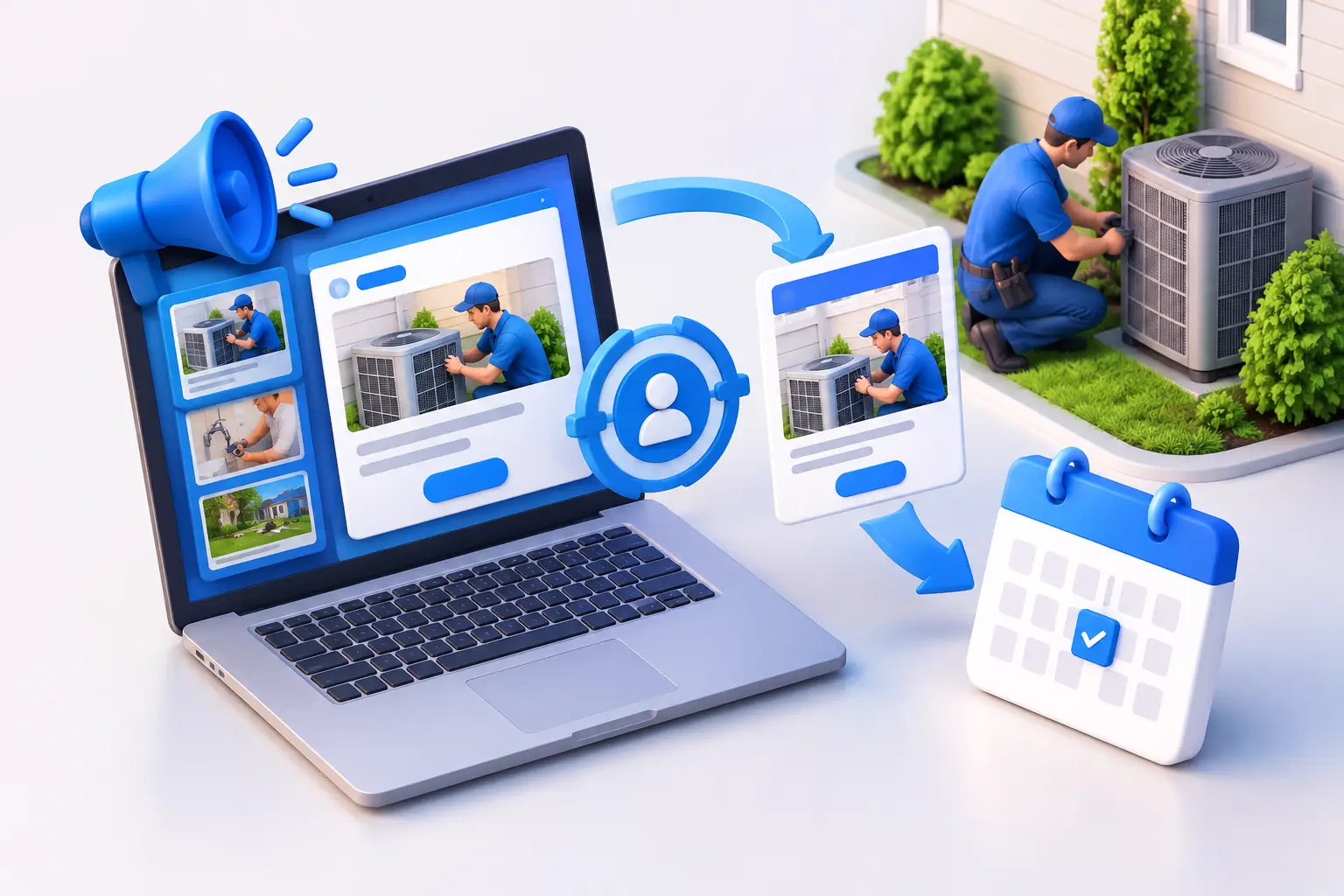
Someone visits your dental practice website, checks your new-patient page, and leaves without calling. A homeowner looks at your emergency plumbing service at 9:30 p.m., then gets distracted. A family compares three vacation rental management companies before closing the tabs.
Those visitors are not necessarily lost. They may be researching, comparing options, waiting for payday, checking with a spouse, or simply not ready to act at that exact moment. Remarketing ads for service businesses give you a practical way to stay visible while that decision is still being made.
Done well, remarketing is not about following people around the internet with the same generic ad. It is a controlled follow-up system. You show a relevant message to people who already demonstrated interest, remove them once they become leads or customers, and measure whether the campaign creates calls, form submissions, bookings, and revenue.
How Remarketing Ads for Service Businesses Work
Remarketing starts when someone takes a trackable action on your website, landing page, or social profile. That might mean viewing a service page, starting a booking form, watching a video, or reaching a checkout or contact page without finishing.
Google Ads and Meta Ads can then show ads to defined groups of past visitors. The important word is defined. A person who spent two minutes reviewing a kitchen remodel portfolio should not see the same message as someone who briefly landed on your homepage from an unrelated search.
For a local service business, the goal is usually not a sale directly inside the ad. The goal is to bring a qualified prospect back to the next useful step: call, request an estimate, book a consultation, schedule an appointment, or check availability.
That makes remarketing especially useful in categories where customers rarely decide immediately. Contractors, dentists, med spas, real estate professionals, fitness studios, financial professionals, and hospitality businesses all deal with consideration periods. Even an urgent service can involve a pause while someone compares reviews, verifies service areas, or asks for a recommendation.
Start With Intent, Not One Big Audience
The most common mistake is building one audience called “website visitors” and serving everyone the same ad for 90 days. It is easy to set up and usually wasteful.
A better approach separates visitors based on what they did and how close they were to contacting you. A service business might create audiences for:
- Visitors to high-value service pages, such as roof replacement, Invisalign, water damage, or wedding venue rentals
- People who started but did not submit a form or complete an online booking
- Visitors who reached pricing, financing, service-area, or contact pages
- Past leads who did not book, when your tracking and privacy practices support that use
- Existing customers, who should usually be excluded from new-customer campaigns or shown a different offer
These groups have different levels of intent. Someone who read a blog post about “how often to service an AC unit” is still early in the process. Someone who visited your AC repair page, checked financing, and opened the contact form is much closer to a decision.
Your ad, landing page, and call to action should reflect that difference. Early-stage visitors may respond to proof and education, such as before-and-after work, reviews, a service checklist, or a short explanation of your process. High-intent visitors generally need a direct path back to booking. Give them a clear reason to return, then make contacting you easy.
Match the Message to the Service and Sales Cycle
Remarketing works best when it answers the question the prospect still has. Generic messages like “Need help? Contact us today” rarely do enough work on their own.
For a remodeling contractor, an ad might focus on project planning, visible craftsmanship, and a straightforward estimate process. For a dentist, it may emphasize convenient scheduling, patient comfort, or clear next steps for a new-patient visit. For a property manager on the Emerald Coast, the message may focus on local expertise, responsive communication, and what owners can expect during peak visitor season.
Timing matters just as much as messaging. A pressure washing lead may convert within a few days. A custom-home prospect can take months. A Destin restaurant or attraction may need a very short window to bring vacationers back before they choose another plan for the evening.
There is no universal audience duration. Start with the real buying cycle, then review performance. Shorter windows can preserve urgency for immediate services. Longer windows can make sense for high-consideration projects, but they need fresh creative so the campaign does not feel repetitive.
An offer can help, but it is not required. Discounts are not the only lever. Faster scheduling, a no-pressure consultation, transparent financing information, seasonal availability, a free assessment, or proof that you serve a specific area can be more valuable than cutting price.
Use Google and Meta for Different Jobs
Google remarketing is often strongest when people are actively returning to research. Display, YouTube, and certain campaign types can keep your business visible as prospects continue their search. Search campaigns can also use audience signals and observation data to help you understand how past visitors behave when they search again.
Meta remarketing is useful for bringing people back through Facebook and Instagram, where visual proof and familiarity matter. This is particularly effective for businesses with strong project photos, transformations, testimonials, venue visuals, team content, or short educational videos.
The platforms are not interchangeable. A homeowner searching “water heater repair near me” has different intent than someone scrolling Instagram after work. Google usually captures demand closer to the moment of need. Meta can reinforce trust, demonstrate quality, and reintroduce your business before the next search happens.
For many service businesses, the right answer is a small, measured combination rather than trying to force every dollar into one platform. Budget should follow lead quality and booked revenue, not whichever platform reports the most clicks.
Tracking Is What Keeps Remarketing Honest
Remarketing can look successful if you only watch click-through rates. A campaign may generate cheap clicks from people who were already likely to return, while producing few additional leads.
Track the actions that matter to the business: submitted forms, phone calls of meaningful duration, completed appointment requests, online bookings, and ideally the leads that become paying customers. If calls are a major conversion path, call tracking matters. If your booking tool lives on another domain, that handoff must be tracked correctly. If your team follows up slowly, ads may be blamed for a sales-process problem.
This is where many campaigns break down. The ad platform reports leads, but nobody knows which leads booked. Or the form thank-you page is tracked, but phone calls are invisible. Or customer lists are never used to exclude people who already bought.
Spry Growth approaches this as a customer acquisition system, not an ad-setting exercise. The ads, landing page, tracking, and lead response process need to work together. Otherwise, you are only measuring activity.
Control Frequency and Protect the Customer Experience
Remarketing should feel timely, not intrusive. Set sensible frequency limits where the platform allows, rotate creative, and exclude converters quickly. A person who just booked an estimate does not need to see “Request an estimate” ten times that week.
Be especially careful in sensitive categories. Healthcare-related advertisers must follow platform policies and avoid messaging that implies knowledge of a person’s health status. More broadly, every service business should use accurate claims, clear privacy practices, and creative that earns attention without making people uncomfortable.
Also watch geography. A business serving Niceville, Fort Walton Beach, and the 30A area does not benefit from paying to repeatedly reach people well outside its practical service range. Narrow targeting to the markets you can serve, while remembering that visitors may research before arriving in the area.
Common Reasons Remarketing Fails
Remarketing fails when it is treated as an automatic add-on instead of a campaign with a clear job. The usual problems are broad audiences, generic ads, weak landing pages, missing call tracking, and no exclusions for leads or customers.
Another issue is insufficient traffic. Remarketing audiences need enough qualified visitors to work. If a niche business only gets a small number of website visits each month, improving the website, local SEO, Google Search campaigns, or referral process may be the higher priority first.
The landing page also matters. Sending every visitor back to a slow homepage forces them to search for the same information again. Send them to the relevant service page, show the proof they need, and make the next step obvious. On mobile, that often means a prominent call button, a short form, and no unnecessary friction.
Build the Follow-Up Your Traffic Deserves
You already paid for much of your website traffic through time, SEO, referrals, Google Ads, Meta Ads, or local visibility. Letting interested visitors disappear without a structured follow-up is a missed opportunity.
Start small: identify your most valuable service, build an audience around that page and its conversion path, create two or three genuinely useful ad messages, and track booked outcomes. Once you know which audience returns as real opportunities, you can expand with confidence.
The point is not to be everywhere a prospect goes. It is to show up again with a clear, credible reason to choose you when they are ready to act.